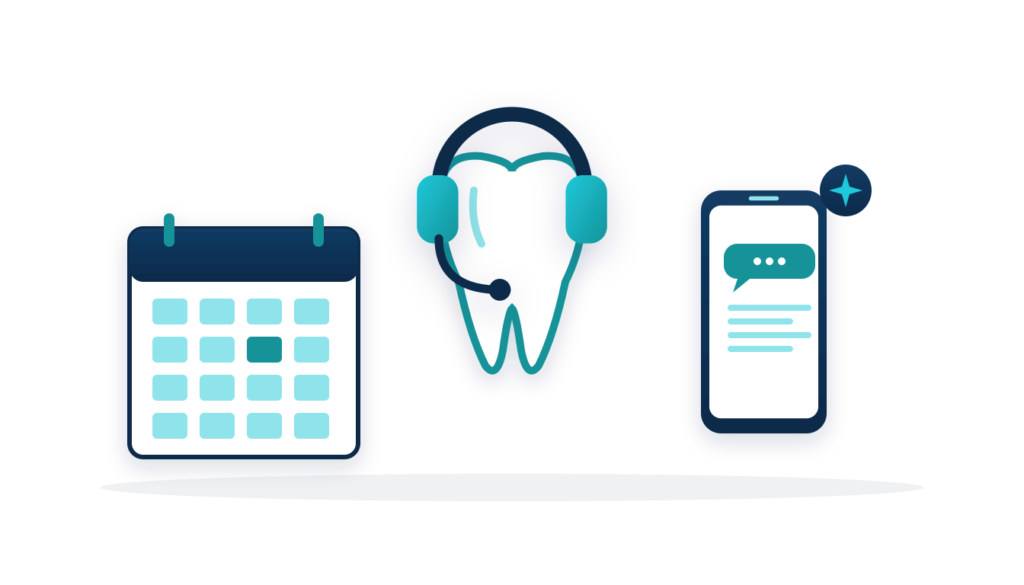
An AI dental receptionist is a voice AI agent that answers your practice’s phone, talks to patients in plain conversation, books or requests appointments, answers common questions and passes urgent calls to a human. It works 24/7, it never puts a caller on hold because the front desk is busy checking someone out, and it costs a fraction of a full-time hire. But dental offices handle protected health information, so HIPAA changes how you pick and set one up.
This guide covers what an AI receptionist can and can’t do for a dental office in 2026, what HIPAA actually requires, what it costs, how to set it up and what I’d look at first. No hype. Just what you need to make a smart call.
A quick word on where I’m coming from. I’m not a dentist, and I’ve never run a dental office. I’ve been selling online since 2005 and running high-ticket dropshipping stores since October 2010, and I founded Ecommerce Paradise in 2015. On my stores, every missed call was a missed sale, so I’ve spent years obsessing over phone coverage. Today I run a US business line from Bali on Quo, and its AI agent, Sona, answers when I can’t. That’s my first-hand experience with AI call answering. The HIPAA material below comes from HHS guidance, and the pricing comes from official provider pages checked on November 17, 2026, per our editorial standards. This is not legal advice. Run your setup past your compliance advisor.
Why dental offices are adding AI receptionists
Think about your front desk at 10am. One person is checking a patient out, another is on the phone with an insurance company, and the main line is ringing. That call might be a new patient with a $3,000 treatment plan in their future. If it goes to voicemail, a lot of people just call the next office on Google.
I saw the same thing on my high-ticket stores. Buyers spending thousands wanted to talk to a real person before they bought. When nobody picked up, they didn’t leave a message. They moved on. Dental patients are no different, especially new patients and people with a toothache who want to be seen today.
An AI receptionist helps in 3 spots:
- Overflow during busy hours, so callers don’t hit voicemail when the desk is slammed.
- After hours, nights, weekends and holidays, when a lot of people finally have time to call.
- Lunch breaks and staff meetings, which is when phones go dark at a lot of small practices.
If you’re new to the idea, start with my main AI receptionist guide. It explains how the technology works for any business. This page focuses on dental.
What an AI dental receptionist can do
Here’s what most AI receptionists can handle in 2026. Features vary by product, so confirm each one with the vendor before you sign.
Answer every call in a natural voice
Modern voice AI understands normal speech, not just “press 1.” Callers can say “I chipped a tooth and I need to come in” and the agent figures out what they need.
Book, reschedule or request appointments
Some products book directly into your schedule. Others collect the details and send a request your team confirms. Direct booking depends on whether the product connects to your practice management software, so ask about your exact system.
Answer common questions
Hours, location, parking, accepted insurance networks, new patient forms, whether you see kids, what to bring to the first visit. You train it on your answers. This is where AI saves your front desk the most time.
Triage urgent calls
A good setup recognizes urgent dental issues, like severe pain, swelling or a knocked-out tooth, and transfers the call or alerts your on-call dentist. Anything that sounds like a medical emergency, such as trouble breathing or swallowing, should get a clear instruction to call 911. You decide these rules. Write them down and test them hard.
Send summaries and texts
After each call you get a transcript or summary. Many tools can text the caller a link to new patient forms or your booking page, if they opted in to texts.
What it shouldn’t do
An AI receptionist should not give clinical advice, diagnose anything or quote treatment prices it can’t verify. It also shouldn’t pretend to be a human if a caller asks. Keep it in its lane: answer, collect, book, route.
HIPAA and AI receptionists: what dental practices need to know
This is the part you can’t skip. Most dental practices are covered entities under HIPAA. An AI receptionist hears names, dates of birth, symptoms, insurance details and appointment info. That’s protected health information.
You need a business associate agreement
HHS explains that a business associate is a person or company that performs functions for a covered entity involving PHI. A covered entity can share PHI with a business associate only after getting satisfactory written assurances, which in practice means a business associate agreement, or BAA.
So the first question for any AI receptionist or phone vendor is simple. Will you sign a BAA, and which plan includes it? If the answer is no, it’s not a fit for patient calls.
Storing data counts, even if it’s encrypted
Some vendors argue they’re just passing calls through. Be careful. HHS’s guidance on cloud computing says a cloud service provider that stores ePHI is a business associate, even if it only stores encrypted data and doesn’t hold the encryption key. The “conduit” exception is narrow. It covers transmission-only services, plus temporary storage incident to that transmission.
An AI receptionist records calls, writes transcripts and stores summaries. That’s storage. Treat the vendor as a business associate and get the BAA.
Check what the BAA actually covers
This catches a lot of people. A phone provider might sign a BAA for calls and voicemail but not for texting, AI features or third-party integrations. Ask the vendor to confirm in writing which features fall under the BAA, including the AI agent, transcripts, recordings and texting. If a feature isn’t covered, don’t use it for patient information.
Keep messages minimal
HHS’s FAQ on leaving messages for patients says the Privacy Rule doesn’t prohibit leaving messages on answering machines, but providers should limit the amount of information disclosed. HHS suggests leaving just the office name and number, plus what’s needed to confirm an appointment, or asking the patient to call back.
Apply the same thinking to AI follow-up texts and voicemails. “This is Bright Smile Dental confirming your appointment Tuesday at 2pm, reply C to confirm” is fine. Details about the procedure are not.
Your own HIPAA checklist for AI calls
- Signed BAA covering every AI and phone feature you’ll use.
- Access controls so only the right staff can see recordings and transcripts.
- A retention rule for how long recordings and transcripts are kept.
- Updated notice of privacy practices, if your advisor says it’s needed.
- A risk analysis that includes the new phone and AI tools.
- Staff training on what the AI does and what to do with its summaries.
- Call recording consent handled in your greeting, based on your state’s rules.
AI receptionist vs human answering service vs your front desk
You have 3 basic ways to cover the phones. Most practices end up mixing them.
| Option | Best for | Strengths | Weak spots |
|---|---|---|---|
| Your front desk | Daytime calls with existing patients | Knows your patients and schedule | Busy, can’t be on 2 calls at once, goes home at 5 |
| AI receptionist | Overflow, after hours, FAQs, booking requests | 24/7, handles many calls at once, low cost per call | Can misunderstand, needs good training and rules |
| Live answering service | After hours and callers who want a person | Real humans, handle messy calls well | Costs more per minute, not every service offers direct booking |
My take: use your team for the bulk of daytime calls, then let AI catch overflow and after-hours calls. If your patients skew older or your calls are often complicated, a human answering service for after hours may be worth the extra cost. I compare human options in my guide to the best answering service for small business.
What an AI dental receptionist costs
Pricing models vary a lot. You’ll see per-minute pricing, per-call pricing, monthly bundles and custom quotes from dental-specific vendors. Here are real examples I checked on official pages on November 17, 2026. These are general business tools, not dental-only products, so confirm healthcare terms with each vendor.
| Provider | Type | Pricing I verified | HIPAA notes |
|---|---|---|---|
| Quo | Phone system with AI agent | Business plan $23 per user per month annually, AI calls billed in credits | Quo says HIPAA compliance and a BAA are available on Business and Scale |
| Talkroute | Phone system with AI receptionist in beta | Pro $59 per month for 10 users, AI receptionist from $39 per month plus $0.40 per AI minute | Pricing page shows a BAA on Pro and Enterprise |
| PATLive | Live human answering | 200 minutes for $349 per month, pay as you go from $49 | Pricing page doesn’t mention HIPAA, ask before signing |
A few notes on these numbers.
Quo’s pricing page lists Business at $23 per user per month billed annually or $33 monthly. Every plan includes 1,000 AI credits a month, which is about 10 Sona calls, and paid credit tiers start at $25 a month for about 40 calls. Quo’s own HIPAA article says Business and Scale plans offer a signed BAA on request. It doesn’t say whether Sona is covered by the BAA, so confirm that with Quo before Sona handles patient calls.
Talkroute’s AI receptionist is listed as a beta that requires a business phone plan. Beta products change fast, so check the current terms.
PATLive says it doesn’t use AI to answer calls. It’s 100% human. Its medical and wellness page mentions dental practices, scheduling in your practice management software and 24/7 coverage, with a 14-day free trial.
Dental-specific AI receptionist products usually price by quote. Ask for the total monthly cost at your call volume, setup fees, contract length and what happens if you go over.
A simple way to judge the cost
Look at your phone reports for one month. Count the missed calls. Now estimate how many were new patients. If even 2 or 3 new patients a month book because something answered, the AI almost certainly pays for itself. Compare that to the cost of a part-time receptionist just to cover lunch and after hours.
How to set up an AI receptionist for a dental office
Here’s the order I’d follow.
Step 1: Pull your call data
Check your current phone system for call volume by hour, missed calls and after-hours calls. That tells you whether you need overflow coverage, after-hours coverage or both. If your current system can’t show you this, that’s a sign it’s time for a better small business phone system.
Step 2: Get the BAA before anything else
Don’t connect a single patient call until the BAA is signed and you know exactly which features it covers.
Step 3: Write your knowledge base
Hours, address, parking, insurance networks you’re in, new patient process, cancellation policy, what counts as an emergency and who’s on call. Keep it short and specific. The AI is only as good as what you teach it.
Step 4: Set the routing rules
Decide when the AI answers. Common setups are: after the phone rings 4 or 5 times during business hours, all calls after hours, and all calls during lunch. Set a clear transfer path for urgent dental issues and a 911 instruction for medical emergencies.
Step 5: Decide on booking
Direct booking into your schedule is great if the integration is solid. If not, start with booking requests your team confirms the next morning. It’s safer while you learn how the AI performs.
Step 6: Test like a patient
Call it yourself. Have your team call it. Try a new patient, a reschedule, an insurance question, a toothache at 9pm and a caller who mumbles. Read every transcript from the first 2 weeks and fix the answers it gets wrong.
Step 7: Tell patients
Update your website and voicemail greeting so patients know they can call any time. Some practices tell callers up front that they’re speaking with an AI assistant. I think that’s the honest way to do it.
Mistakes to avoid
- Turning on AI for patient calls before the BAA is signed.
- Assuming the BAA covers texting and AI just because it covers calls.
- Letting the AI give clinical advice or quote treatment fees.
- No clear emergency routing.
- Never reading the transcripts. The first month of review is where you find the problems.
- Hiding the AI. Callers get annoyed when they figure it out on their own.
What I’d use
Here’s what I’d do if I were setting this up for a small practice.
If you need a new phone system with AI built in, I’d start with Quo on the Business plan, because that’s the plan Quo lists for HIPAA and a BAA, and I already trust its AI agent on my own line. Before Sona handles patient calls, get Quo to confirm in writing that the BAA covers it. My full Quo review covers the downsides too.
If you want a flat price for a small team and you’re comfortable with a beta product, Talkroute is worth a look, since its Pro plan shows a BAA and covers 10 users for $59 a month.
If you’d rather have real people answer after hours, PATLive has a 14-day free trial, so you can test it on real calls. Ask about HIPAA terms and a BAA before you start, because its pricing page doesn’t cover them.
I haven’t tested Talkroute or PATLive hands-on for this site. Those recommendations come from their official pricing and service pages. For more options side by side, see my ranked list of the best AI receptionists.
Stop sending new patient calls to voicemail
Quo’s Business plan lists HIPAA compliance with a BAA on request, plus the Sona AI agent and a 7-day trial.
FAQ
Is an AI dental receptionist HIPAA compliant?
It can be, but no tool is compliant on its own. You need a signed business associate agreement that covers the AI features you use, plus your own safeguards like access controls, retention rules and staff training. HHS treats cloud vendors that store patient information as business associates.
How much does an AI receptionist cost for a dental office?
It depends on the pricing model. General business tools I checked range from about $25 to $199 a month in AI add-ons on top of a phone plan, or per-minute rates around $0.40. Dental-specific products usually quote custom pricing. Always ask for the total at your real call volume.
Can an AI receptionist book appointments in my practice management software?
Some can, if they integrate with your specific system. Others collect the request and your team books it. Ask the vendor to show you a live booking in your software before you sign.
Will patients know they are talking to an AI?
Many will figure it out, and some will ask. I recommend telling callers up front that they’re speaking with an AI assistant and making it easy to reach a person. Honesty builds more trust than a clever disguise.
What happens with dental emergencies after hours?
You set the rules. A good setup transfers urgent dental calls to your on-call dentist or texts them right away, and tells anyone describing a medical emergency to call 911. Test these paths before you go live.
Should I use an AI receptionist or a live answering service?
Use AI for overflow, FAQs and after-hours booking requests, because it’s cheaper per call and handles many calls at once. Choose a live answering service if your callers often need a human touch. Many practices use both.
Related guides
- AI receptionist guide
- Best AI receptionist
- Best answering service for small business
- Business VoIP for beginners
- Small business phone system guide

Trevor Fenner publishes VoIP Paradise, covering business phone software, remote-team communications and practical calling workflows. Articles distinguish documented research from direct testing.